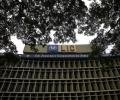
Taking a cue from Zomato's stellar initial public offering (IPO), through which it garnered a valuation of Rs 1 trillion, the government has asked its advisors and valuers to ascertain if the Life Insurance Corporation of India (LIC) should be valued at Rs 10 trillion or more. The government is looking to offload about 10 per cent stake in LIC through the IPO. At that valuation, the government stands to net at least Rs 1 trillion from LIC's proposed IPO, which will boost the Centre's efforts to meet its disinvestment target of Rs 1.75 trillion for the current financial year.

The IPO is an offer for sale of 38 million shares by SBI, BOB, LIC, PNB and T Rowe Price. Barring T Rowe and PNB, the others are selling stake to comply with Sebi norms.
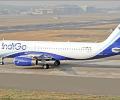
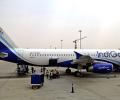
Top no-frills carrier IndiGo on Tuesday approached capital markets regulator Sebi with Initial Public Offer.

The airline is gearing up to come out with an initial public offer.

More companies are harbouring aspirations to go public, following a sharp market rebound after June's nadir. In August, seven companies expecting to raise a cumulative Rs 10,425 crore filed their draft red herring prospectus (DRHP) with the Securities and Exchange Board of India (Sebi). The amount they are looking to mop up is the highest since March, when 13 companies filed their DRHPs to raise a combined Rs 19,494 crore, reveals data provided by PRIME Database - a source of comprehensive information on all capital market offerings.
The company, backed by China's Ant Group, is planning to issue fresh shares worth Rs 7,500 crore in the IPO. This will make this India's third-largest offering after Reliance Power and DLF.
SoftBank-backed hospitality major OYO is planning to reduce the number of shares it aims to sell through public listing because of reduced capital requirements and technology headwinds. This comes at a time when valuations of start-ups, including that of OYO, have taken a hit. "OYO earlier filed papers for its IPO (initial public offering) based on its funding requirements at the time.

'The success of one or two IPOs does not dictate whether the upcoming IPOs will be successful or not, but it certainly indicates that the markets and investors are enthusiastic about startup IPOs.'

India witnessed 22 initial public offers worth over $2.5 billion in the first three months of 2021 amid "high momentum" in the country's capital markets and the trend is likely to stay bullish in the current quarter also, according to a report. Leading consultancy EY India's IPO (Initial Public Offer) report released on Wednesday showed that consumer products and retail, diversified industrial products, automotive and transportation were the most active sectors in terms of the number of IPOs in the 2021 first quarter. The IPOs include both in the main as well as SME (Small and Medium Enterprise) markets.

Vadra launched Skylight Hospitality four months after the DLF shares got listed, amid complaints of inadequate disclosure from investor associations and former business partner Kimsuk Krishna Sinha.
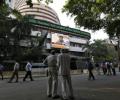
911 have been traced by the Securities and Exchange Board of India (Sebi), while the rest of the 402 are not traceable on the bourses

With the stock market turning choppy, fintech start-up MobiKwik, which had filed a draft red herring prospectus (DRHP) to raise around $250 million through an initial public offering (IPO), is now looking to raise money from the private market. "We will raise private money but we are not in dire need. "The business was profitable for the first time in the December quarter on a top line of around Rs 150 crore and that will be maintained in the March quarter also. We are generating cash," said Upasana Taku, co-founder of MobiKwik.
Life Insurance Corp of India (LIC), which is aiming to launch its initial public offering (IPO) next month, is set to alter the pecking order of top listed companies in the country. Depending upon where the government prices the IPO, the stock could end up becoming India's most valuable company on the first day and even get fast-tracked into global benchmark indices given its sheer size. According to market sources, LIC's IPO is targeting to mop up Rs 63,000 crore and Rs 75,000 crore.
Life Insurance Corporation of India (LIC) has increased the size of its shareholders' fund to Rs 6,600 crore from Rs 100 crore in a bid to accommodate a larger shareholder base ahead of its public listing. The size of the fund has been enhanced by retaining two years' of dividend and issuing fresh capital, said an official. Increasing the size of the shareholders' fund will help boost the number of shares for allotment in the insurer's initial public offering (IPO). The corpus represents the amount of equity in a company that belongs to its shareholders.
Move aimed at giving more headroom to foreign investors.

The government currently holds 87.40 per cent stake in IRCTC. To meet Sebi's public holding norm, it has to lower its stake in the company to 75 per cent.
With the Russia-Ukraine war roiling financial markets globally, the government may defer the mega IPO of LIC and wait for an opportune time to get the maximum value of its holding in the state-owned insurance behemoth, sources said. "It's a full blown war now so we will have to assess the situation for going ahead with the LIC IPO," a government source said. Finance Minister Nirmala Sitharaman, too, had indicated review of the IPO in view of the evolving geopolitical situation.

It's raining IPOs, with eight issues hitting the market in a span of six days. However, the pace of new filings points to a deluge during the latter part of the year. So far this year, 58 companies have filed their draft red herring prospectus (DRHP) with the market regulator for initial public offerings (IPOs), exceeding the combined tally of 50 in the last two years. Industry participants said the filing count could cross 100 this year, setting a new benchmark in terms of amount mobilised in a calendar year.

Initial public offerings (IPOs) by start-ups are bringing cheer to investors and investment bankers alike. After food delivery company Zomato, Nykaa has issued the fattest pay cheque to the managers of its share sale -- Rs 148 crore, or 2.8 per cent of its issue proceeds of Rs 5,300 crore. In absolute terms, this is the second-highest amount paid to investment bankers for handling an IPO, while in percentage terms, it is the highest for large IPOs (>$300 million) in the last one year, shows an analysis of the data provided by Prime Database, a primary market tracker.

Paytm will look to raise up to $1.5 billion as part of primary share sale, leading up to its initial public offering (IPO), which is planned for November, a person familiar with the developments said. The company is looking to file its draft red herring prospectus (DRHP) by July, according to sources. According to this person, though the details of the listing are being worked out, Paytm may take the qualified institutional buyer (QIB) route to list and issue fresh equity to raise funds.
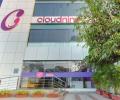
No expecting mother ever needs to travel for more than 30 minutes to reach one of their hospitals, believes the Cloudnine group.

The shares - close to 30% of the total holding - are expected to list on rival National Stock Exchange on or around February 3.

Layoffs, corporate restructuring, governance and most importantly profitability: The 14 Indian startups that plan IPOs this year are pulling out all the stops to ensure successful market debuts.

Food delivery platform Zomato's initial public offering was oversubscribed on the opening day on Wednesday with retail investors bidding for 2.7 times the number of shares reserved for them. The offer received bids for 75.60 crore equity shares against an IPO size of 71.92 crore, stock exchange data showed. Retail investors sought 2.69 times the portion reserved for them. Against 12.95 crore shares reserved for retail individual investors, 34.88 crore shares were bid by 1700 hours.
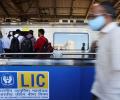
Under the new model, the surplus distribution in the participating policyholders' fund has been modified to 90:10 in a phased manner, wherein 90 per cent will go to policyholders and 10 per cent to shareholders. Further, 100 per cent of the surplus generated out of the non-participating business will be available for distribution to all shareholders.
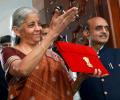
At the customary post-Budget media interactions, Finance Minister Nirmala Sitharaman and her topmost bureaucrats touched upon a number of issues. The minister said the government taxing income from digital virtual assets did not give them legitimacy and that issue was being dealt separately in the planned cryptocurrency Bill. She also expressed confidence that the Budget targets were achievable.

IndiGo has about 400 planes on order.

India's first home-grown mapping company MapMyIndia is looking to list in the public market by raising around Rs 1,200 crore at a Rs 6,000-crore valuation. Sources said the company is ready with its draft red herring prospectus documents and is likely to file as early as next week. While the money will be used for business expansion, it will also give MapMyIndia's early investors, including Qualcomm, PhonePe, and Japanese mapmaker Zenrin Co., a chance to exit. The Verma family, which founded the company, will continue to remain promoters.
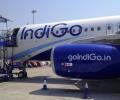
Long-haul low-cost carriers like Scoot and AirAsia X offer a similar configuration.

The primary market is set for a bumper Rs 80,000-crore bonanza with 30 companies already filing IPO papers to raise Rs 55,000 crore, while around 10 more are lined up for this month itself, seeking to mop up another Rs 25,000 crore, say investment bankers. The market has been on a non-stop rally, hitting new records almost every week, on the back of an influx of investors -- a vast majority of them first-timers -- coupled with a flood of liquidity. Foreign funds alone had pumped in a record $35 billion into the market in FY21, while the trend has continued this fiscal as well. Domestic institutions led by LIC have also infused trillions of rupees, helping woo retail investors in troves -- the year saw over 20 million new investors coming to the market.

The company plans to raise Rs 750 crore; other realtors may follow.
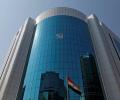
Markets regulator Sebi on Tuesday proposed to rationalise the definition of 'promoter group' and move to the concept of 'person in control' as well as reduce the minimum lock-in periods for promoters' and other shareholders post an IPO. In a consultation paper, the watchdog has also suggested streamlining the disclosures requirement of group companies. The Securities and Exchange Board of India (Sebi) has sough comments from public on the proposals till June 10.

The $8.5 billion TVS Group received final approval for a family resettlement on February 4 from the National Company Law Tribunal (NCLT). It is an arrangement that is noteworthy because unlike many other corporate settlements this one was sorted out amicably and without any open conflicts.

June was a memorable month for the 101-year-old Tamilnad Mercantile Bank (TMB). Last month, the Thoothukudi-based bank witnessed two new landmarks in a history in which the last three decades could easily qualify for a Kollywood blockbuster.

Reports have suggested Rs 400-650 as the possible IPO price

The story of Sahara India Pariwar founder Subrata Roy, who died in Mumbai on November 14 aged 75, is the stuff of movies - of a spectacular rise and an equally spectacular fall. Born in Araria, Bihar, Roy was 30 when he set up Sahara in 1978. He started with a capital of about Rs 2,000, a peon, a clerk and his father's Lambretta scooter in Gorakhpur, eastern Uttar Pradesh, writes Tamal Bandyopadhyay in his 2014 book, Sahara: The Untold Story. Sahara was not his first venture.

As corporate India prepares to put its house in order, the transition raises concerns

'The India which was all about glamour and razzmatazz through which he could earn the trust of people of the other India, which was Bharat.'

Ola has reported its first operating profit of Rs 89.82 crore for 2020-21, even as the ride-hailing company's revenue declined 65 per cent to Rs 689.61 crore amid COVID-19 induced lockdowns. As per regulatory documents filed by ANI Technologies - the parent company of Ola - it had logged standalone operating profit (profit before finance cost, depreciation, amortisation and tax (EBITDA)) of Rs 89.82 crore in FY21 on a standalone basis, while it had registered a loss of Rs 610.18 crore in the preceding fiscal year.

There are several examples of one name standing in for many brands.
